OpenAI Education Plugins Move AI From Answers To Workflows
August 5, 2026 - 04:00

OpenAI is quietly changing how its tools are used in classrooms, pushing the conversation away from simple question-and-answer interactions and toward more complex, project-based tasks. The latest education-focused plugins are designed to let students and teachers chain together multiple AI steps, turning a single prompt into a full workflow. Instead of asking for one fact or one paragraph, users can now set up a sequence where the AI researches, outlines, drafts, critiques, and revises its own output.
This shift matters because it changes what students actually need to learn. The old model rewarded writing a good prompt and accepting whatever came back. The new model rewards directing a process and making judgment calls at each stage. A student might ask the AI to generate three possible thesis statements, then have it evaluate each one against a rubric, then ask it to rewrite the chosen thesis in a different tone, and finally have it produce a counterargument. Each step requires the student to check the work, decide what to keep, and tell the AI what to do next.
Educators are still figuring out how to grade this kind of interaction. Some are moving away from grading the final product alone and instead asking students to submit their full prompt chains, along with notes on why they made each choice. The valuable skill is no longer just getting an answer. It is knowing how to break a big task into smaller pieces, how to spot weak logic in the AI's output, and how to steer the tool toward a better result.
The plugins also allow for more collaborative work. Teachers can set up shared workflows where a whole class works through the same steps, but each student takes a different branch. One group might focus on verifying sources while another works on style. The AI becomes less like a search engine and more like a junior colleague that needs constant supervision.
There is still a learning curve. Many students initially try to use the plugins like a magic box, expecting a finished essay in one click. The real value comes when they realize the machine is not giving them the answer, it is giving them a draft that they have to shape. That realization is the whole point. The tool is not replacing thinking. It is forcing a different kind of thinking, one where the human stays in control of the process from start to finish.
MORE NEWS
August 4, 2026 - 07:42
New Maryland Education IG vows robust oversight, has yet to release any reportsMaryland`s freshly appointed Inspector General for Education is vowing to bring tough, independent scrutiny to the state`s public school system, which spends billions in taxpayer money each year....

August 3, 2026 - 18:10
NDSCS and VCSU Sign Career & Tech Ed Articulation AgreementValley City State University and the North Dakota State College of Science have formalized a new partnership aimed at making it easier for students to continue their education. The two institutions...

August 3, 2026 - 00:21
The fight over social media in school has reached the courtroom. Solutions might be complicated.Districts across the country, including Charleston County, are now filing lawsuits against major social media platforms. The core accusation is that companies like Meta, TikTok, and Snapchat have...
August 2, 2026 - 06:06
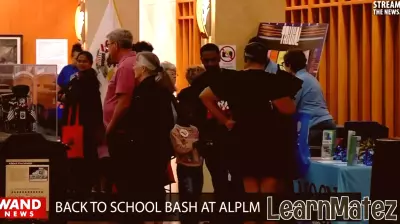
ALPLM hosts Back to School BashThe Abraham Lincoln Presidential Library and Museum closed out the summer season with a lively Back to School Bash on Saturday, drawing families from across the region for a day of hands-on...