The Rise of Collaborative Learning Spaces by 2026
15 May 2026
You know that feeling when you walk into a classroom and it just feels... dead? Rows of desks facing a single board, everyone staring at the back of someone's head, and the only sound is the teacher's voice droning on. It's like we're stuck in a time warp, still pretending that learning is a solo sport. But here's the thing: by 2026, that old model is going to look as outdated as a flip phone. We're on the cusp of a major shift, and it's all about collaborative learning spaces. Let's talk about why this is happening, what it looks like, and how it's going to change the way we think about education.

Why the Old Classroom Model Is Dying
Think about how you actually learn in real life. When you're trying to figure out a problem at work, do you sit alone in a cubicle and stare at a wall? No. You call a coworker, you jump on a video call, you brainstorm over coffee. Learning is messy, social, and full of back-and-forth. So why do we keep cramming students into chairs that are bolted to the floor, facing a single authority figure?The traditional classroom was built for the Industrial Age. It was about efficiency, control, and churning out workers who could follow instructions. But we're not in the Industrial Age anymore. We're in a world that demands creativity, critical thinking, and the ability to collaborate across time zones and cultures. By 2026, the mismatch between how we teach and how we work will be impossible to ignore.
Collaborative learning spaces aren't just a trend. They're a response to a broken system. They acknowledge that no one learns in a vacuum. When you put people together in a space designed for interaction, something clicks. You get questions you wouldn't have thought of. You get explanations that make sense because they come from a peer. You get the kind of deep understanding that only comes from talking it out.
What Exactly Is a Collaborative Learning Space?
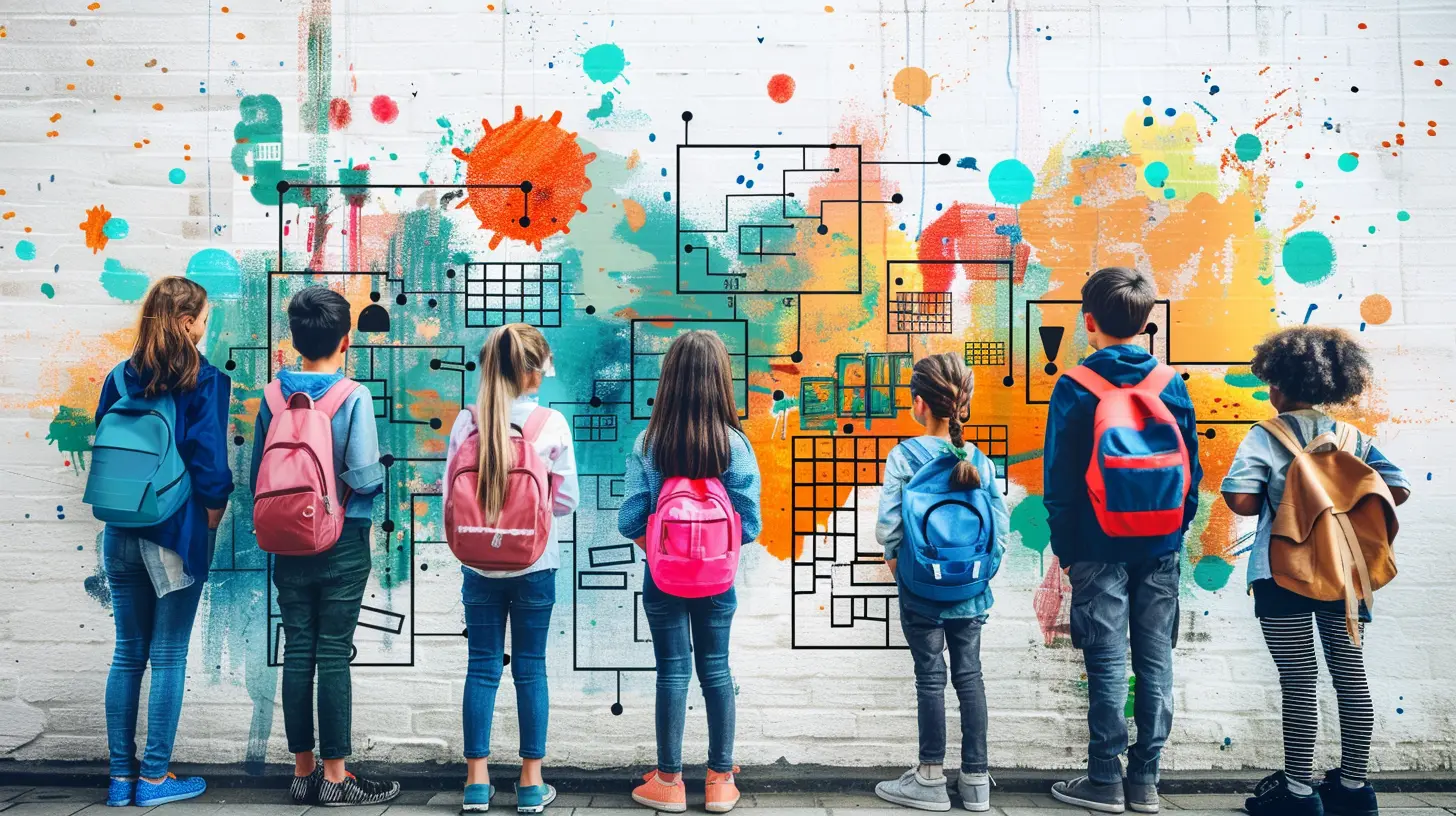
Let's clear something up. A collaborative learning space isn't just a room with a few tables pushed together. That's a start, but it's like calling a tent a house. A real collaborative space is intentionally designed to foster interaction, flexibility, and ownership. It's a physical or virtual environment where the furniture, technology, and layout all work together to encourage people to share, debate, and build on each other's ideas.By 2026, you'll see a few key features in these spaces:
First, flexible furniture. Think lightweight chairs on wheels, tables that can be reconfigured in seconds, and whiteboards that move around like they're alive. Nothing is fixed. You can go from a lecture to a group discussion to a solo work session without leaving the room. It's like a Transformer for learning.
Second, embedded technology. Not the clunky projectors and dusty computers of the past. We're talking about screens that let you share your work with a tap, interactive boards that capture everything, and tools that blend online and offline seamlessly. By 2026, the technology won't be an add-on. It'll be part of the walls.
Third, zones for different modes. A good collaborative space has quiet corners for deep focus, open areas for group work, and soft seating for casual chats. It's like a city neighborhood, not a factory floor. You choose where you need to be based on what you're doing.

The Shift from "My Desk" to "Our Space"
One of the biggest mental shifts happening by 2026 is moving away from personal territory. In the old model, you had your desk, your chair, your little piece of real estate. It was all about ownership. But collaborative spaces are about shared responsibility. You don't own a spot. You own the learning.This can be uncomfortable at first. I've seen students walk into a room with no assigned seats and look lost. They ask, "Where do I sit?" The answer is, "Wherever you want." That freedom is powerful, but it takes getting used to. By 2026, students entering school will have grown up with this idea. They'll expect to move, to choose, to adapt. For them, a fixed desk will feel like a cage.
Think of it like a coffee shop versus a library. In a library, you're expected to be quiet and stay put. In a coffee shop, you can talk, move around, plug in, or just people-watch. Collaborative learning spaces are the coffee shop model for education. They're buzzing with energy, not silence.

Technology as the Glue, Not the Star
Let's be honest: technology can be a crutch. We've all been in a meeting where everyone stares at their laptop instead of talking to each other. The danger with collaborative spaces is that the tech takes over. But by 2026, the smartest spaces will use technology as a tool, not a showpiece.What does that look like? Imagine a classroom where the wall display automatically shows what each group is working on. You can glance over and see who needs help, who's stuck, or who's having a breakthrough. Or picture a virtual space where students from different countries can work on the same digital whiteboard in real time, with voice and video built in. The tech fades into the background, making collaboration feel natural, even when you're miles apart.
The key is that the technology must be intuitive. If students have to spend ten minutes figuring out how to share a file, they've already lost the flow. By 2026, the tools will be so seamless that you won't think about them. You'll just think about the work.
The Role of the Teacher Changes Dramatically
Here's where it gets interesting. In a collaborative learning space, the teacher is no longer the sage on the stage. They become the guide on the side. This isn't just a cute phrase. It's a fundamental shift in power dynamics.Instead of standing in front and delivering information, the teacher moves around the room. They join groups, ask probing questions, and help students when they hit a wall. They're less like a lecturer and more like a coach or a facilitator. By 2026, we'll see more professional development focused on this skill: how to let go of control and trust the process.
Does that mean teachers are less important? Absolutely not. In fact, their role becomes more critical. A good facilitator knows when to step in and when to stay silent. They know how to spark a debate without taking over. They create the conditions for learning to happen, rather than trying to force it. It's like a gardener tending to a garden, not a factory worker assembling parts.
Real-World Examples That Work
Let's look at some places that are already doing this right. Universities like MIT and Stanford have been experimenting with collaborative spaces for years. They have rooms with round tables, multiple screens, and walls you can write on. Students work in teams on real problems, not just textbook exercises. The results are impressive: higher engagement, better retention, and skills that transfer directly to the workplace.But it's not just for higher ed. Some forward-thinking high schools are tearing down walls (literally) to create open, flexible learning areas. They call them "learning studios" instead of classrooms. In these spaces, students might work on a project for a week, moving between research, discussion, and presentation. The teacher cycles through, checking in and pushing deeper.
And don't forget the corporate world. Companies like Google and Apple have long known that collaboration sparks innovation. Their offices are designed with open areas, writable surfaces, and spaces that encourage bumping into colleagues. By 2026, educational spaces will borrow heavily from these ideas. Why should the workplace be more creative than the school?
The Hidden Challenge: Culture and Comfort
Let's not pretend this is easy. Shifting to collaborative learning spaces comes with real challenges. The biggest one is culture. If students are used to sitting quietly and taking notes, they might resist a space that asks them to talk and move. Some will feel exposed or anxious. Others will dominate the conversation while quieter students fade into the background.This is where the design of the space matters. A good collaborative space includes options for introverts. There are nooks where you can work alone, or headphones you can use to signal "don't disturb." By 2026, we'll see more attention to these details. It's not about forcing everyone to be extroverted. It's about giving people the tools to collaborate on their own terms.
Comfort is another factor. If the chairs are hard, the lighting is harsh, and the temperature is off, no one wants to stay. Collaborative spaces need to be inviting. They should feel like a place you want to be, not a place you have to be. Think cozy, not clinical.
Assessment in a Collaborative World
Here's a sticky question: how do you grade collaboration? In the old system, you could give a test and know exactly who knew what. But when learning happens in groups, it's harder to measure individual contributions. By 2026, we'll see new forms of assessment that focus on process, not just product.Teachers might use peer evaluations, self-reflection journals, and observations of group dynamics. They might track how students ask questions, give feedback, and build on ideas. The goal is to value the journey, not just the final answer. This is messy and subjective, but it's also more honest. Real learning isn't a multiple-choice question.
The Cost Question: Is It Worth It?
Let's address the elephant in the room. Redesigning classrooms costs money. Furniture, technology, training, and maintenance add up. School budgets are already tight. So why bother?The answer is that the cost of not changing is higher. We're preparing students for a world that doesn't exist yet. If we keep teaching them the way we did fifty years ago, we're failing them. Collaborative learning spaces are an investment in skills that matter: communication, adaptability, and teamwork. These are the things employers are screaming for. And they're the things that help people lead happier, more connected lives.
Plus, you don't have to do it all at once. A school can start small: one reimagined room, a pilot program, a single grade level. By 2026, the best practices will be clear, and the costs will come down as more suppliers enter the market. It's a long game, but it's worth playing.
What to Expect by 2026
So, what does the future actually look like? By 2026, I predict we'll see three major trends.First, hybrid collaboration will be normal. Not every student will be in the same room at the same time. Some will join from home, from a library, or from another country. The space will need to bridge physical and digital seamlessly. This isn't science fiction. It's already happening, and it will accelerate.
Second, spaces will adapt to the learner. Imagine a room that senses when a group is stuck and suggests a new resource. Or a desk that reminds you to take a break when you've been staring too long. By 2026, smart environments will use data to make collaboration smoother, without being creepy.
Third, the line between school and real life will blur. Collaborative learning spaces won't just be for class. They'll be used for clubs, community meetings, and even parent events. They'll become hubs for the whole community, not just students. This makes them more valuable and more sustainable.
A Personal Take
I'll be honest: I was skeptical at first. I grew up in the old system, and part of me liked it. It was predictable. You knew what to expect. But then I saw a collaborative space in action. I watched a group of students who had never met design a solution to a local problem in an hour. They argued, they laughed, they built on each other's ideas. By the end, they had something none of them could have created alone.That's the magic. Collaborative learning spaces don't just teach content. They teach people how to work with other people. And in a world that's more connected and more complex than ever, that's the skill we need most.
So as we move toward 2026, let's not just rearrange the furniture. Let's rethink what learning means. Let's build spaces that invite curiosity, reward risk-taking, and honor the fact that we're all in this together. Because at the end of the day, learning isn't a solo journey. It's a conversation. And the best conversations happen when you're sitting around a table, not in a row.
all images in this post were generated using AI tools
Category:
Interactive LearningAuthor:

Eva Barker
Discussion
rate this article
2 comments
Reina Middleton
Exciting times ahead! Collaborative learning spaces will truly transform our education experience.
July 4, 2026 at 4:37 AM
Eva Barker
Absolutely! Collaborative learning spaces have the potential to reshape how we engage and learn together. Exciting indeed!
Carmel Middleton
This article highlights the exciting potential of collaborative learning spaces. Embracing these environments can truly transform education and inspire innovative thinking among students.
May 15, 2026 at 11:10 AM
Eva Barker
I appreciate your thoughts! Collaborative learning spaces really do have the power to reshape education and spark creativity. Looking forward to seeing how they evolve by 2026.