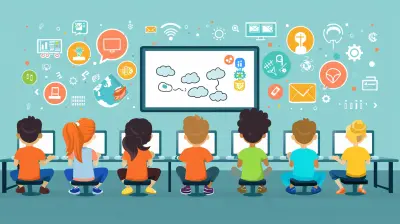
Reimagining Global Education in the Age of Artificial Intelligence
17 February 2026
Ever feel like the world’s spinning faster than we can keep up with? We’ve gone from chalkboards to smartboards, from textbooks to tablets, and now—AI is knocking on the classroom door. Artificial Intelligence isn’t just changing how we shop, drive, or chat with Siri. It's transforming education on a global scale. But here's the big question: Are we ready for it?
Let’s dig deeper into how we can rethink education in this AI-driven era. Spoiler alert: It’s going to be a wild but fascinating ride!
The AI Boom: A Snapshot
Let’s start with this: AI is not coming—it’s already here. You probably encounter it every day without even realizing it. Netflix recommendations? That’s AI. Google search results? Yep, AI again. The same tech that drives your daily digital life is now reshaping classrooms across the globe.From personalized learning platforms to AI-powered tutors that never sleep, we’re seeing a major shift in how students learn and how teachers teach. But here’s the thing—it’s more than just swapping out a human for a bot. It's about transforming the very foundation of education.
Why Traditional Education Needs a Makeover
Picture this: a classroom from 1920 and one from 2020. Other than the tech gadgets, not much has changed, right? Desks still face forward. Teachers still lead from the front. Students still passively absorb info. But the world outside those classroom walls? Totally different.In today’s digital age, static curricula and one-size-fits-all teaching methods just don’t cut it anymore. The workforce is evolving. Fast. Employers seek critical thinking, emotional intelligence, adaptability, and digital fluency. Sadly, many students graduate without these skills.
AI offers an opportunity to close this gap. With the right approach, we can move from memorization-based education to mastery-based learning.
How AI is Already Changing the Game
Here’s the cool part—AI isn’t just sci-fi anymore. It’s working, now.1. Personalized Learning Paths
Imagine a classroom where each student has a custom-built curriculum. One kid struggles with fractions? No problem—AI tailors extra math practice just for them. Another is racing ahead in reading? Great—the platform levels up their content.This isn’t some Jetsons-style fantasy. Tools like Khan Academy, Coursera, and Duolingo already use machine learning to adapt content in real-time. It’s like having a personal tutor for every student, 24/7.
2. Smart Grading & Feedback
Teachers spend hours grading papers. It’s time-consuming, let’s be honest. But AI can automate much of this process—especially for multiple-choice, grammar, or even essay writing (yes, really!). That frees up teachers to focus on what matters most: building relationships and fostering understanding.3. Virtual Classrooms & AI Tutors
AI-powered chatbots and virtual teaching assistants can support learners by answering questions, guiding them through problems, and even helping with homework. Think of them as your academic Siri—but smarter and less sarcastic.Especially in remote or underserved regions, these digital helpers can bridge educational access gaps in a big way.
Breaking Down the Benefits of AI in Education
So why exactly is everyone hyped about AI in the classroom? Well, here are some rock-solid upsides:Accessibility for All
One major win: AI evens the playing field. Students with disabilities? Language barriers? Learning differences? AI tools can offer translations, text-to-speech, visual aids, and interactive interfaces that cater to various learning styles.No more "one size fits all." Now it’s "what works best for you."
Real-Time Insights for Teachers
Teachers get dashboards with instant feedback—who’s struggling, who’s coasting, and who’s falling off the radar. This means they’re no longer flying blind. It’s like having x-ray vision into each student’s progress.Lifelong Learning Becomes the Norm
The old model? Graduate, then work until retirement. The new model? Learn, adapt, upskill, and repeat. AI enables microlearning and on-the-go education. Whether you're 6 or 60, there’s always a course, app, or tool to help you level up.Challenges We Can't Ignore
Hold up—it’s not all sunshine and smartboards. There are some real challenges we’ve got to face.1. Digital Divide
Let’s be real—not every student has access to fast internet or fancy devices. AI won’t work if half the world’s students are excluded from the tech powering it.Bridging this digital divide is non-negotiable. We can’t call it “global education” if it only works in Silicon Valley.
2. Data Privacy Concerns
AI collects data. A lot of it. From test scores to learning behaviors, it’s all on record. So, who owns that data? How is it stored? Can it be misused?Ensuring airtight privacy laws and ethical use is crucial. Education should never come at the cost of student security.
3. Human Connection Still Matters
Can a robot reassure a stressed-out teen before exams? Or inspire a kid to chase their dreams? Probably not.No matter how advanced AI gets, the human element—the mentorship, empathy, and inspiration a great teacher brings—is irreplaceable. AI should enhance, not replace, human interaction.
Rethinking What We Teach
Here’s a fun thought: What if we stopped teaching kids to out-memorize machines and instead, taught them what machines can't do?Rise of Soft Skills
Skills like creativity, resilience, problem-solving, and collaboration are the future. You can’t program empathy or innovation into a bot, but you can nurture them in a classroom.AI can handle the facts. Our job? Teach students how to question, connect, and create—things no algorithm can master.
Digital Literacy is a Must
We shouldn’t just use AI—we need to understand it. Teaching kids to code, interpret data, and question algorithms is like teaching them to read and write in the 21st century.Think of AI as the new electricity. The sooner we teach how it works, the more empowered the next generation becomes.
Teachers: The Superheroes of the AI Age
Let’s bust a myth—AI won't replace teachers. If anything, it makes them more powerful.From Lecturers to Learning Coaches
In an AI-powered classroom, teachers evolve. They’re not just information deliverers—they become facilitators, mentors, and motivators. Think coach, not commander.They’ll guide discussions, inspire curiosity, and offer the human touch machines lack.
Continuous Upskilling
Teachers will need support too. Professional development must include AI training, digital tools, and new teaching strategies. Just like students, educators should keep learning and adapting.A Global Vision for AI in Education
Ready for a curveball? AI in education isn’t just about gadgets and software. It's about equity, inclusion, and empowerment globally.Tailoring to Local Needs
AI doesn’t have to be one-size-fits all. It can adapt to local languages, cultures, and educational goals. Whether you're in Nairobi, Mumbai, or Tokyo, AI can personalize learning to local needs.Global Collaboration
With AI driving education, countries can collaborate more than ever. Shared resources, online classrooms, multi-country projects—that’s the beauty of tech. Learning becomes a global experience.What the Future Might Look Like
Close your eyes and picture the classroom of 2035. Maybe it’s virtual. Maybe it’s on Mars. Who knows?But one thing’s for sure—AI will play a huge role. We’re talking about:
- AI mentors guiding students through career paths.
- Virtual reality field trips across the globe.
- Learning algorithms adapting in real-time.
- Schools focused more on skills than grades.
It's not just about improving schools—it’s about designing a whole new system from the ground up.
Final Thoughts
Reimagining global education in the age of Artificial Intelligence is a huge task—but it’s also full of incredible opportunities.It won’t be perfect. There will be hurdles, setbacks, and hard questions. But if we get it right, we’ll build an education system that empowers every learner, everywhere. One that’s flexible, inclusive, and future-proof.
So, are we ready to rewrite the playbook? Because the classroom of tomorrow is already taking shape today.
all images in this post were generated using AI tools
Category:
Global EducationAuthor:

Eva Barker
Discussion
rate this article
2 comments
Kate McKinney
Exciting times ahead! Embracing AI in education opens doors to creativity and learning. Let’s inspire a brighter future together! 🌍✨
February 28, 2026 at 12:16 PM
Eva Barker
Thank you! Embracing AI truly has the potential to transform education and inspire future generations. Let's innovate together! 🌟
Selene Bowman
This article beautifully highlights the urgent need for a compassionate, inclusive approach to global education amidst the rise of AI. By prioritizing empathy and understanding, we can empower students to thrive in an ever-changing world while ensuring no one is left behind.
February 19, 2026 at 5:36 AM
Eva Barker
Thank you for your insightful comment! I completely agree that empathy and inclusivity are essential for empowering students in our rapidly evolving landscape.