How Artificial Intelligence Will Reshape Classrooms by 2026
8 May 2026
Picture this: it's a Tuesday morning in 2026, and your kid is sitting in math class. But instead of a teacher scribbling on a whiteboard, there's a glowing screen that seems to know exactly when your child is about to zone out. It pauses, cracks a terrible joke about fractions, and then explains the problem in a way that actually clicks. No raised hands. No "I don't get it" whispers. Just learning that feels less like homework and more like a conversation with a really patient, slightly nerdy friend.
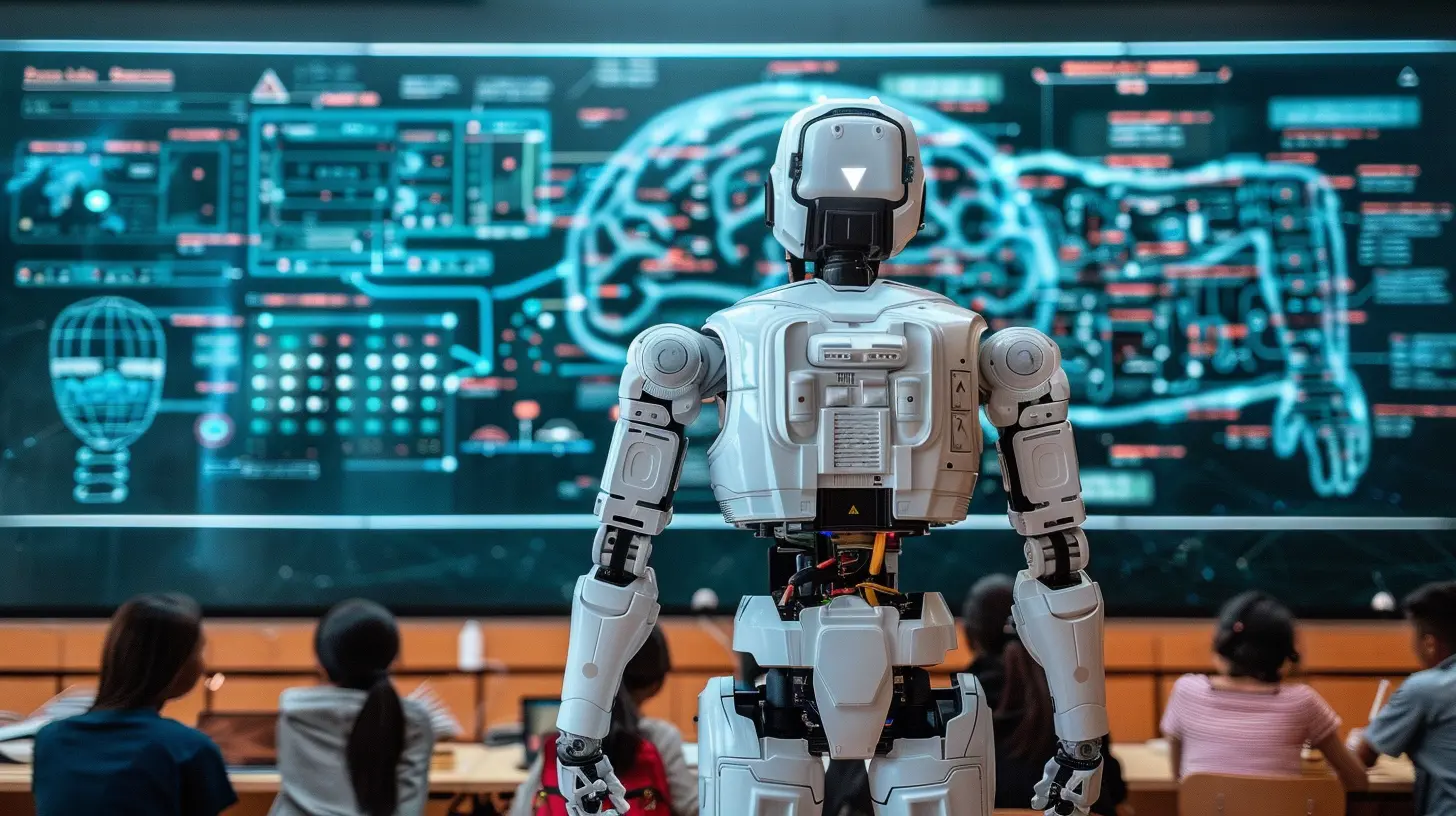
That's not science fiction. That's the classroom of 2026, and artificial intelligence is the architect. We're not talking about robots replacing teachers or kids plugging into some dystopian machine. We're talking about a subtle, sometimes hilarious shift in how education works. By 2026, AI won't just be a guest in the classroom; it will be the invisible T.A. that never sleeps, never gets coffee breath, and never loses its cool when a student asks why algebra matters for the 47th time.
Let's be honest: the traditional classroom has been running on a 19th-century operating system. One teacher, thirty kids, one-size-fits-all lectures. It's like trying to stream Netflix on a dial-up modem. AI is about to upgrade that system, and it's going to be messy, wonderful, and occasionally weird.
The End of the "Boredom Epidemic"
You remember that feeling, right? Sitting in class, watching the clock tick, while the teacher drones on about the War of 1812. Your brain has already checked out, planning lunch or replaying that embarrassing moment from yesterday. That's not laziness. That's a signal that the content isn't speaking to you.By 2026, AI will kill that boredom dead. Here's how: adaptive learning platforms will use real-time data to adjust the pace of a lesson. If a student masters quadratic equations in ten minutes, the AI will skip the next fifteen minutes of examples and jump into a real-world application. If another student is struggling, the AI will slow down, offer different explanations, or even switch to a video game-style tutorial.
Think of it like a personal trainer for your brain. A good trainer doesn't make you do the same reps as the person next to you. They watch your form, push you when you're ready, and back off when you're about to snap. AI will do that for every student, simultaneously. No more "I'm bored" or "I'm lost." The system will catch those signals before the student even raises their hand.
The Teacher Becomes a Coach, Not a Lecturer
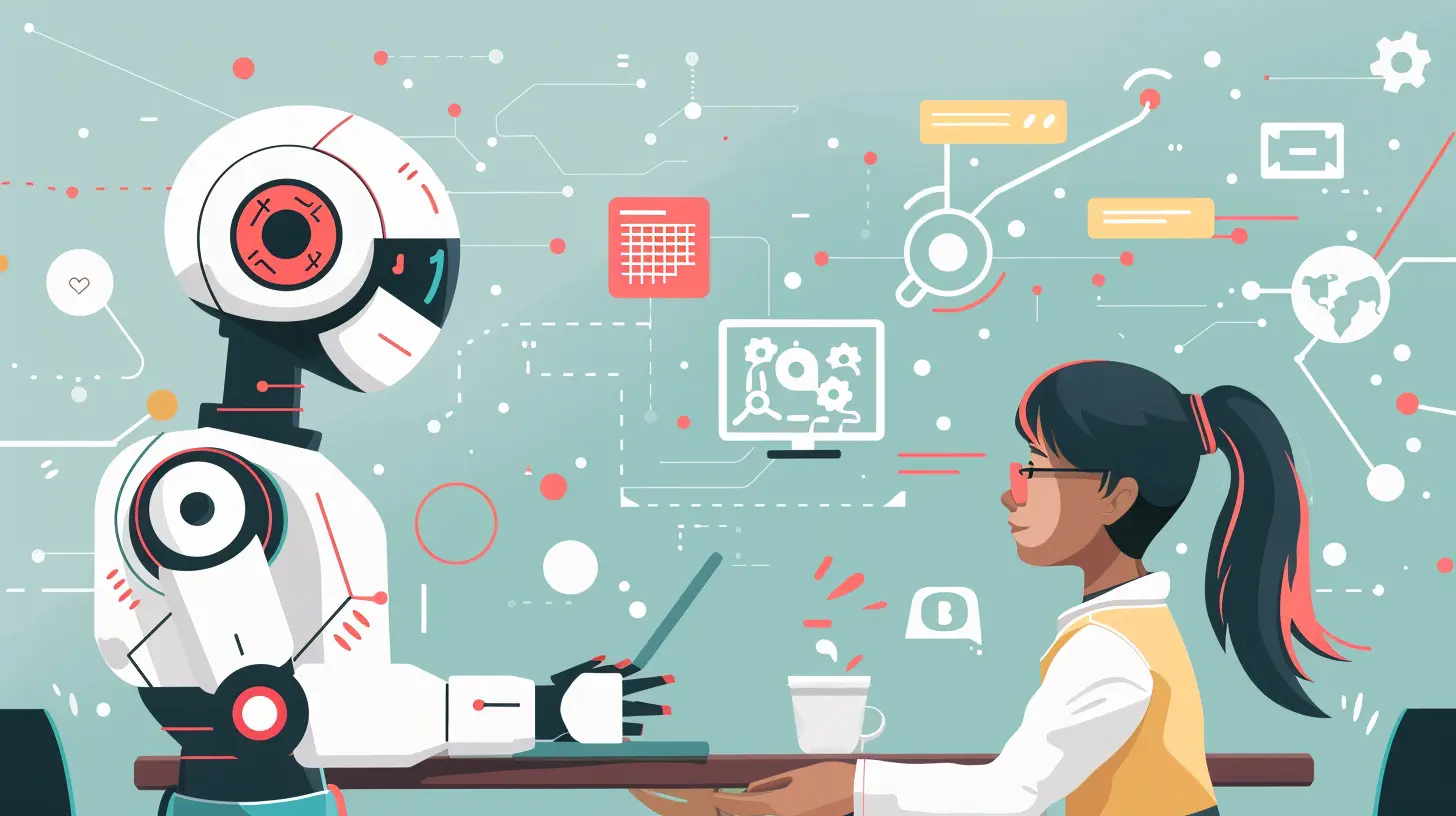
Let's address the elephant in the room: does AI mean teachers are out of a job? Absolutely not. But the job description is going to change. By 2026, teachers will spend less time grading papers and more time doing what they actually trained for: inspiring, mentoring, and connecting with kids.Imagine a teacher who walks into class and already knows which three students didn't sleep well last night, which two are struggling with a concept, and which one is ready for a challenge. That's what AI analytics will provide. The teacher can then spend the whole class period having real conversations, running debates, or doing hands-on projects. The AI handles the drudgery: grading multiple-choice quizzes, tracking attendance, even sending automated reminders to parents about missing homework.
It's like the difference between a chef who has to chop all the vegetables by hand versus one who has a food processor. The chef still creates the dish, but the boring part is gone. Teachers will finally have the bandwidth to be creative, to notice the kid who's having a rough day, and to make learning feel human again.
Your Homework Will Judge You (In a Good Way)
Homework has always been a weird ritual. You do it at night, hand it in the next morning, and wait days for feedback. By then, you've already forgotten what you were supposed to learn. It's like sending a letter and getting a reply via carrier pigeon.AI will flip that. By 2026, homework will be interactive and immediate. Imagine an AI tutor that lives inside your kid's tablet. When they answer a question wrong, the AI doesn't just mark it with a red X. It says, "Hmm, close! But you forgot to carry the one. Want to try again? Here's a hint." It can even generate new problems on the fly, tailored to the mistake.
This isn't about surveillance. It's about feedback loops that actually work. Students will learn faster because they'll get corrections in real-time, not three days later. And parents? You'll finally stop getting that dreaded "help me with this math problem" text at 10 PM, because the AI will have already helped.
The Death of the "Standardized" Test
Standardized tests are the broccoli of education: everyone hates them, but we keep serving them. They measure how well a student performs on one specific day, under pressure, with a number-two pencil. They don't measure creativity, curiosity, or resilience.AI will make these tests look like relics. By 2026, assessments will be continuous and invisible. As a student works through a digital lesson, the AI is constantly evaluating their understanding. It tracks not just right answers, but how they got there. Did they take a creative shortcut? Did they struggle but persist? Did they ask for help at the right time?
The result is a "living report card" that shows a student's growth over time, not just a snapshot. College admissions officers and employers will have a much richer picture of a kid's abilities. And students won't feel like they're being judged by a single, terrifying exam. It's like the difference between a doctor who takes your blood pressure once and says "you're fine" versus one who monitors your heart rate for a month and says "actually, you're amazing at recovering from stress."
The Language Barrier? What Language Barrier?
By 2026, AI translation tools will be so seamless that a classroom with students speaking ten different languages will feel like a single conversation. Real-time translation earbuds or smart glasses will let a Spanish-speaking student hear the teacher's lesson in Spanish, while a Mandarin-speaking student hears it in Mandarin. The teacher speaks in English, but everyone hears their native tongue.This isn't just about immigrants or international students. It's about making classrooms truly inclusive. A kid from a non-English-speaking home won't struggle just because of the language. They'll be able to focus on the math, the science, the history. And they'll learn English faster because they'll be immersed in content they actually understand.
Think of it like subtitles for real life. You don't stop watching a movie because it's in another language; you turn on the subtitles. AI will do that for the entire school day.
The Special Needs Revolution
If there's one area where AI will be a superhero, it's special education. By 2026, AI tools will be incredibly good at adapting to neurodivergent students. A student with ADHD might get a lesson that breaks down into 90-second chunks with frequent movement breaks. A student on the autism spectrum might get a version of the same lesson with less sensory stimulation and more direct language.AI won't just accommodate these students; it will celebrate their differences. A dyslexic student can have text read aloud in a calming voice. A student with anxiety can get gentle prompts that say "take a deep breath" before a test. The technology will be like a personalized learning assistant that knows exactly what each student needs, without making them feel singled out.
This is huge. For years, schools have tried to fit square pegs into round holes. AI will let the pegs be pegs, and the holes be holes, and find a way to make them fit beautifully.
The Classroom Becomes a "Third Place"
By 2026, the physical classroom will look different. With AI handling lectures and quizzes online, the classroom will become a space for collaboration, creation, and messy human interaction. Think of it like a makerspace meets a coffee shop meets a debate club.Students will come to school to build things, argue ideas, and work in teams. The AI will have already front-loaded the knowledge. The teacher will facilitate. You'll see kids huddled around a 3D printer, designing a bridge, while the AI runs simulations to test their design. You'll see a group arguing about climate policy, with the AI providing real-time data on carbon emissions.
The classroom of 2026 won't be about passively receiving information. It will be about actively using it. And that's way more fun than sitting in rows and taking notes.
The "Mom, Can You Help Me?" Problem Solved
Every parent knows the dread of helping with homework, especially when the subject is something you haven't touched since 1995. AI will be the ultimate backup. By 2026, every student will have access to a personal AI tutor that can explain any concept at any grade level.But here's the twist: the AI will also explain it to the parent. Imagine your kid brings home a problem about quantum mechanics (because by 2026, that's probably in the curriculum for 8th graders). You can ask the AI to give you a 30-second summary. Then you can help your kid without feeling like an idiot.
The AI becomes the family learning assistant. It's not cheating. It's like having a friendly encyclopedia that talks back. And it will save countless arguments at the dinner table.
The Privacy Elephant
Okay, let's not pretend this is all sunshine and rainbows. AI in classrooms means a lot of data. By 2026, schools will be collecting information on how students learn, what they struggle with, even their emotional states (via facial recognition or keystroke patterns). That's terrifying if not handled carefully.The good news is that regulation will catch up. By 2026, we'll see strict laws about data privacy in education. Schools will have to get explicit consent, anonymize data, and give parents control over what's collected. The bad news is that some companies will try to push boundaries. Parents and teachers will need to stay vigilant.
But here's the thing: the same data that raises privacy concerns is what makes AI so powerful. The goal isn't to spy on kids. It's to understand them well enough to teach them better. It's a trade-off, but one that, if done right, can be a net positive.
The "I Hate School" Kid Finally Loves It
You know that kid who just hates school? The one who doodles all day, asks "when will I ever use this?" and counts the minutes until the bell? AI might be the thing that saves them.By 2026, AI will be able to connect any lesson to a student's personal interests. If a kid loves video games, the math lesson can be about calculating damage in a fantasy RPG. If a kid loves cooking, the chemistry lesson can be about why bread rises. The AI will know what makes each student tick and will weave that into the curriculum.
Suddenly, school doesn't feel like a chore. It feels relevant. And that's the secret to motivation. You can't force a kid to care. But you can show them that what they're learning actually matters to their world. AI will be the bridge.
The Bottom Line
By 2026, classrooms won't be replaced by robots. They'll be transformed by invisible intelligence. Teachers will have superpowers. Students will have personal tutors. Homework will be instant. Tests will be continuous. And learning will finally feel like it was designed for humans, not for factory workers.Is it going to be perfect? No. There will be glitches, bad implementations, and probably some AI that tells terrible knock-knock jokes. But the direction is clear. We're moving from a system that treats all students the same to one that treats each student as unique.
And honestly? That's the most human thing technology has ever done.
So get ready. The classroom of 2026 is coming. It's going to be smarter, funnier, and a lot less boring. And if you're a parent, you might even start enjoying homework help. Well, maybe not. But at least the AI will be there to take the heat.
all images in this post were generated using AI tools
Category:
Education BlogsAuthor:

Eva Barker
Discussion
rate this article
2 comments
Blake Love
Oh great, by 2026, I guess our future classrooms will be run by robots. Can't wait for my AI tutor to have a nervous breakdown when I ask about Shakespeare...
May 23, 2026 at 8:56 PM
Eva Barker
I get the humor! AI will definitely bring unique challenges, but it can also enhance our understanding of subjects like Shakespeare in unexpected ways.
William Bellamy
The integration of AI in classrooms by 2026 promises personalized learning experiences, enhancing student engagement and providing educators with valuable insights for improved teaching.
May 15, 2026 at 11:10 AM
Eva Barker
I agree, the potential for AI to tailor learning to individual needs could really transform education. It's exciting to think about how this will change the way students engage and how teachers approach their craft.