From Chaos to Clarity: Managing the PBL Classroom in 2027
17 May 2026
Let's be honest. If you walked into a Project-Based Learning (PBL) classroom back in 2020, what did you see? Probably organized chaos. Groups of kids arguing over poster board, one student on a Chromebook watching cat videos, another one sharpening a pencil for the tenth time, and you, the teacher, running around like your hair is on fire. It was loud. It was messy. And deep down, you wondered if anyone was actually learning anything.
Fast forward to 2027. The noise is different now. The chaos has a shape. The mess has a method. We have finally figured out that PBL is not about letting kids "figure it out" alone. It is about designing a system where clarity lives inside the chaos. In this article, I am going to walk you through what managing a PBL classroom actually looks like in 2027. No fluff. No theory that sounds good on a whiteboard but fails on a Tuesday afternoon. Just real talk on how to turn the noise into a symphony.

The Old Problem: Too Much Freedom, Not Enough Structure
Remember the early days of PBL? We were told to step back and let the students take the wheel. And they did. They drove the car straight into a ditch. Why? Because freedom without a map is just panic. Kids do not automatically know how to manage time, divide tasks, or ask the right questions. Giving them a project and saying "go for it" is like handing a five-year-old a chainsaw and telling them to build a birdhouse. It is going to end badly.In 2027, we have finally admitted that structure is not the enemy of creativity. It is the container that holds it. Think of it like a river. Without banks, water just spreads out into a muddy swamp. But with banks, it flows fast and powerful. Your job is to build those banks. Not to block the flow, but to channel it.
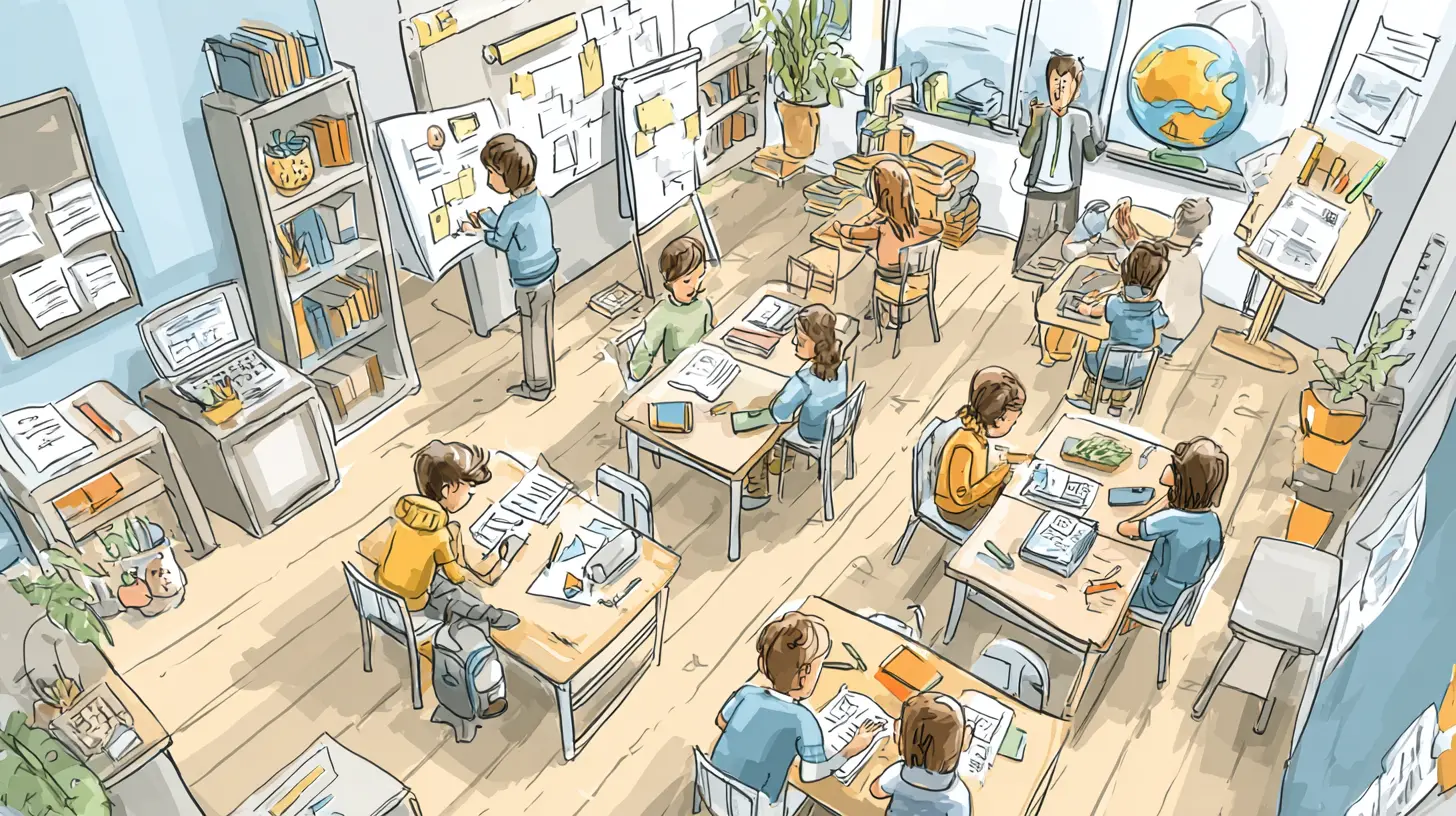
The 2027 Shift: From Manager to Architect
Here is the biggest change I have seen. In 2025, teachers were still acting like managers. You know the type. "Johnny, get back to work." "Sarah, your group is too loud." "Why is there glue on the ceiling?" You are constantly putting out fires.In 2027, the best PBL teachers are architects. They design the space, the time, the tools, and the expectations before the students even walk in. You do not manage chaos. You design it out of existence. This means you spend more time planning the systems than you do policing the behavior. And let me tell you, it works.
For example, instead of telling students to "manage their time," you give them a visual timeline on a shared digital board that auto-updates. Instead of saying "work together," you assign specific roles with clear responsibilities written on a laminated card. Instead of hoping they ask good questions, you give them a question bank they have to pick from before they can ask you for help. It sounds rigid, but it is actually liberating. Students feel safe because they know exactly what is expected.
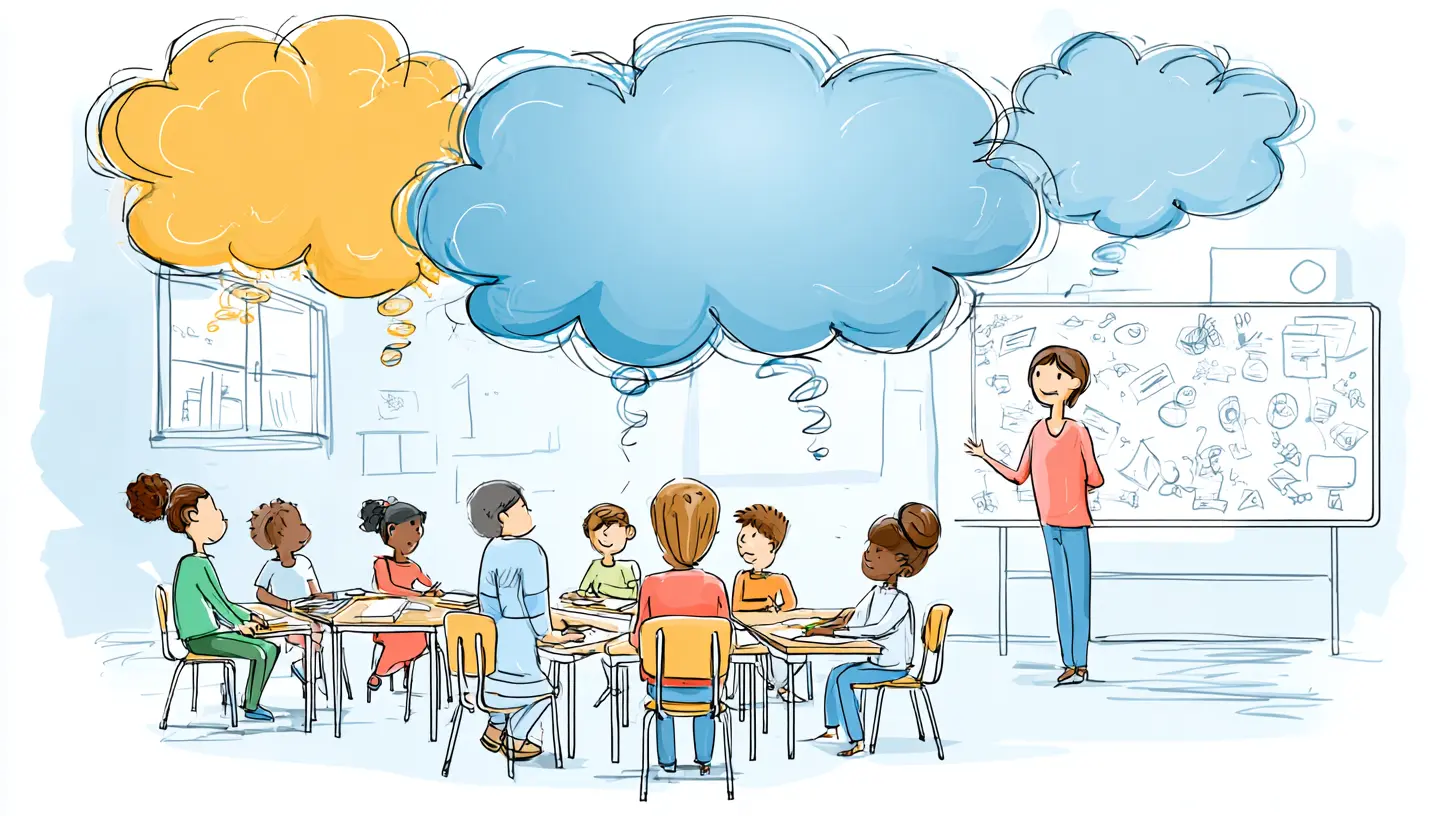
The Role of AI as the Silent Assistant
I know, I know. Everyone is talking about AI in education. But let me tell you what actually works in 2027. It is not about using AI to write essays for students. That is cheating, and it is boring. The real power is using AI as a project management assistant.Think about the biggest pain point in PBL: the middle of the project. The first week is exciting. The last week is frantic. But weeks two and three? That is where the chaos lives. Students lose steam. They forget deadlines. They argue about who is doing what.
In 2027, every group has a shared AI assistant that tracks progress. It sends gentle reminders. It flags when one student has not contributed in two days. It even suggests how to split up the remaining work based on who is good at what. The AI is not grading them. It is just keeping the train on the tracks. This frees you up to do the real teaching. You can sit with a struggling group and dig deep into the content instead of asking "did you check your calendar?"

Routines That Kill the Noise
Let me give you something practical. Here are three routines that every well-managed PBL classroom in 2027 uses. I did not invent these. I stole them from teachers who have been doing this longer than me. But they work.First, the daily stand-up meeting. Every morning, each group stands up (literally, they stand) for two minutes. They answer three questions: What did we do yesterday? What are we doing today? What is blocking us? That is it. No long speeches. No deep discussions. Just a quick pulse check. If a group cannot answer those three questions, you know they are in trouble before they even start.
Second, the "ask three then me" rule. Before a student can come to you with a question, they have to ask three resources. Their group mates. The project guide. The AI assistant. Most questions disappear after step two. The ones that remain are actually good questions that require real teaching.
Third, the visible progress wall. Not a digital one. A real wall in your classroom. Each group has a physical card that they move across a spectrum from "stuck" to "rolling" to "almost done." It sounds old school, but it works. Students can see who is struggling. They can offer help. And you can see at a glance who needs you most.
The Emotional Side of Chaos
Here is something the training manuals never tell you. PBL is emotionally exhausting for students. Especially the quiet ones. The kids who are used to sitting alone and doing worksheets. When you throw them into a group and say "be creative," they freeze. They feel lost. And that feeling turns into chaos.In 2027, we finally started talking about emotional safety in the PBL classroom. It is not just about the project. It is about the person. You have to build in check-ins that are not about grades. "How are you feeling about the group today?" "Do you feel heard?" "Is there something you want to say but are afraid to say it?"
I use a simple color system. Every day, students put a colored sticky note on their desk. Green means good. Yellow means okay but struggling. Red means I need help now. I do not ask them to explain. I just look at the colors. If I see a lot of red in one group, I sit with them. Not to fix the project. To fix the people.
Grading Without the Drama
Let us talk about the elephant in the room. How do you grade a PBL project without losing your mind? In the old days, we graded the final product. But that is like judging a chef only on the last plate they serve. What about the burnt pancakes along the way? What about the teamwork? What about the learning that happened when they failed?In 2027, we grade the process as much as the product. Here is how it works. Each student has a "learning log" that they update daily. It is not a diary. It is a structured document where they answer prompts like "What skill did I practice today?" and "What mistake did I make and what did I learn from it?" The AI checks for completion and basic quality. You grade a random sample once a week.
The final product is only 40 percent of the grade. The process, the collaboration, the reflection, and the growth are the other 60 percent. This changes everything. Students stop obsessing over making a perfect slideshow and start focusing on actually learning. The chaos decreases because the pressure is spread out over time, not concentrated at the end.
The Physical Space Matters More Than You Think
Have you ever noticed that a messy classroom leads to messy thinking? In 2027, teachers finally figured out that the physical layout of the room is a management tool. You cannot have a calm PBL classroom if the desks are all facing the front and the students have to crawl over each other to get supplies.Here is what works. Zones. Clear, labeled zones. A research zone with quiet tables and computers. A collaboration zone with whiteboards and movable chairs. A presentation zone with a small stage and a camera for recording. And a "brain break" zone with a couch and some fidget tools.
Students move between zones based on what they need to do. It is not a free-for-all. They have to sign out of one zone and into another. It takes two seconds. But it gives them ownership over their space and their time. And it stops the chaos of twenty kids all trying to talk at once in the same room.
The Parent Problem
Let me be real. Parents are often the biggest source of chaos in a PBL classroom. They do not understand it. They see their kid "playing" on a computer or "talking" with friends and they think nothing is happening. They want worksheets. They want tests. They want grades they recognize.In 2027, you have to manage parents just like you manage students. You cannot just send a newsletter. You have to invite them in. Literally. Have a "PBL Night" where parents do a mini project themselves. Let them feel the chaos. Let them see the structure. Let them struggle with the same problems their kids face.
Once a parent has spent twenty minutes trying to build a paper bridge with two strangers, they suddenly understand why their child comes home tired. They stop asking for more homework. They start asking how they can help. This reduces the external chaos that leaks into your classroom.
The Truth About Differentiation
Here is a hard truth. PBL is hard to differentiate. When you have one group building a model of a city and another group writing a report on pollution, how do you make sure every student is challenged at their level? You cannot just give the same project to everyone. That is not PBL. That is a craft fair.In 2027, we use "scaffolding menus." Every project has a core set of requirements that everyone must meet. Then there are optional extensions. "If you want a challenge, add this." "If you need more support, use this template." The students choose. It is not extra work for you. It is a menu you create once and use all year.
For example, in a project about climate change, the core requirement is a research poster. The extension could be a video interview with a local expert. The support could be a fill-in-the-blank research guide. Every student works on the same big idea, but the path is different. This kills the chaos of "I am bored" and "I am lost" happening in the same room.
Technology as a Tool, Not a Toy
I have seen classrooms where every student has a tablet and the teacher has no idea what they are looking at. That is not management. That is anarchy. In 2027, we use technology with purpose. Every device has a clear task. If you are in the research zone, your screen shows only research tools. If you are in the collaboration zone, your screen shows the shared doc and the chat.We also use a "focus mode" on the school network. During project time, social media and games are blocked. But here is the trick. We tell the students why. "We are blocking this not because we do not trust you, but because we want you to have the best chance to focus." Most of them get it. And for the ones who do not, there is a simple consequence. If you bypass the block, you lose device privileges for the day. No drama. No yelling. Just a clear rule and a clear result.
The Biggest Lesson I Learned
I have been teaching PBL for over ten years. I have had projects that soared. I have had projects that crashed and burned. And here is what I know for sure. The chaos never fully goes away. You cannot eliminate it. You can only channel it.Think of a river again. A river without banks is a flood. A river with rigid concrete banks is a canal, dead and artificial. But a river with natural banks, with bends and rocks and trees, that river is alive. It has energy. It has movement. It has life.
Your PBL classroom in 2027 should be that river. Not a flood. Not a canal. A living, moving, sometimes surprising river of learning. You are not the dam. You are the bank. You hold the shape. You guide the flow. And you let the water do what water does best. It moves.
So next time you walk into your classroom and it feels loud, do not panic. Ask yourself: is this productive noise or destructive noise? If it is productive, let it flow. If it is destructive, check your banks. Check your systems. Check your zones. Check your routines. The structure is there. You just have to use it.
And remember, the goal is not silence. The goal is clarity. Clarity inside the chaos. That is what managing a PBL classroom in 2027 is all about.
all images in this post were generated using AI tools
Category:
Project Based LearningAuthor:

Eva Barker
Discussion
rate this article
2 comments
Danica McQuillen
Unraveling tomorrow's classroom secrets...
July 9, 2026 at 10:36 AM
Elias Gomez
Navigating the future of Project-Based Learning feels like walking a tightrope above uncertainty. As we step into 2027, the tools we choose and the strategies we adopt may unravel hidden potentials or lead us deeper into the chaos... which path will you take?
May 21, 2026 at 12:53 PM
Eva Barker
I appreciate your insight. It's all about finding balance and embracing adaptability. The right tools and strategies can indeed transform uncertainty into opportunity. Let's choose wisely.