Fostering Entrepreneurial Mindsets Through Project-Based Learning
1 January 2026
Ah, the dream of being your own boss. Who doesn’t want that? No more micromanaging supervisors hovering over your shoulder, endless meetings that could’ve been emails, or office coffee that tastes like regret. But let’s be real—entrepreneurship isn’t just about sipping lattes and brainstorming million-dollar ideas in a fancy co-working space. It’s about mindset, resilience, and a whole lot of failing forward.
And guess what? Schools are finally catching on. Instead of stuffing students' brains with facts they’ll forget by next semester, some educators are embracing Project-Based Learning (PBL) to cultivate those entrepreneurial skills early on. Because, let’s face it, nobody ever built an empire by memorizing the periodic table. 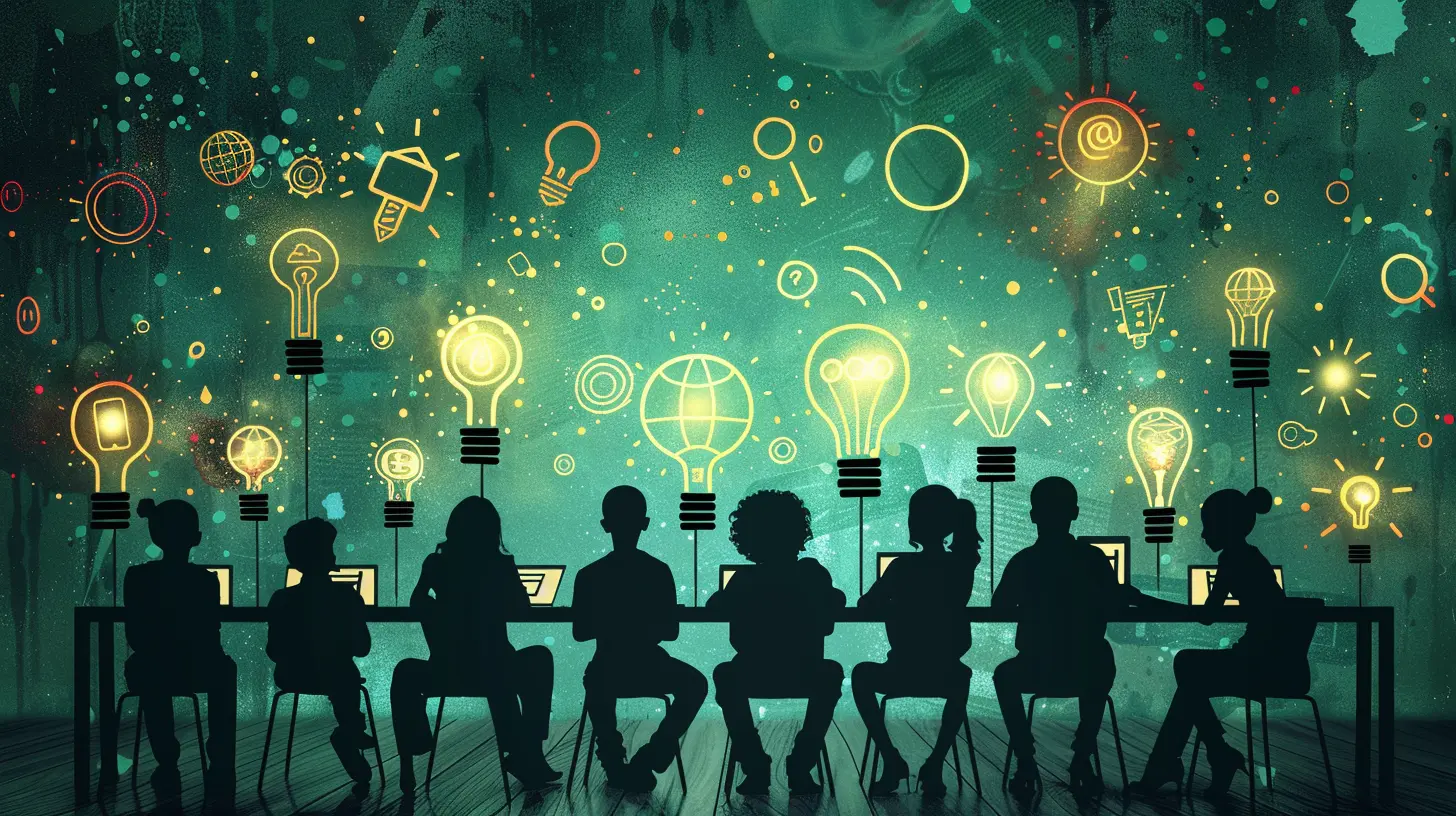
What Is Project-Based Learning (And Why Should You Care?)
You know that feeling of being forced to do a group project with people who’d rather watch paint dry? Yeah, that’s not what we’re talking about here. Project-Based Learning (PBL) is a hands-on, real-world approach to education where students tackle complex problems over time—just like real entrepreneurs do.Instead of passively absorbing information, students actively solve problems, think critically, collaborate, and (hopefully) learn from their mistakes. It’s the closest thing to running a startup without actually maxing out a credit card. 
Why Entrepreneurs and PBL Are a Match Made in Heaven
Let’s break it down—entrepreneurs and PBL have a lot in common:- Problem-solving – Entrepreneurs see problems as business opportunities. PBL forces students to tackle real-world challenges head-on.
- Creativity – Entrepreneurs innovate. PBL encourages students to think outside the box, sometimes even smashing the box altogether.
- Risk-taking – Entrepreneurship is all about uncertain terrain. PBL teaches students to embrace failure as a stepping stone, not a faceplant.
- Collaboration – No one builds a business alone (except maybe that guy in his mom's basement selling weird collectibles online). PBL teaches students how to work effectively in teams.
Long story short, if schools want to produce the next Steve Jobs or Oprah Winfrey, they better start thinking beyond multiple-choice tests. 
How PBL Helps Develop an Entrepreneurial Mindset
1. Encouraging Critical Thinking (A.K.A. Using Your Brain for More Than Just Cramming for Exams)
Entrepreneurs don’t succeed by blindly following instructions—they question, analyze, and think ahead. PBL does the same by putting students in situations where they actually have to think (shocking, right?).Imagine a group of students tasked with launching a product. They have to research their market, figure out pricing, design a prototype, and pitch their idea. Unlike cramming for a test, this kind of learning sticks because it’s relevant and engaging.
2. Teaching Resilience (Because Failure Is a Rite of Passage)
Here’s the thing—failure is inevitable. Even the most successful entrepreneurs have embarrassing flops under their belts. (Remember when Google tried to launch Google Glass? Yeah, neither do most people.)PBL teaches students to fail, learn, and try again. Whether their project flops or flourishes, they develop resilience—a skill far more valuable than regurgitating textbook definitions.
3. Fostering Creativity (AKA Thinking Like a Rebel, But Productively)
Entrepreneurship is all about innovation. PBL pushes students to brainstorm, prototype, and test ideas, giving them the creative confidence to turn “Wouldn’t it be cool if…” into reality.Instead of writing yet another essay they’ll never reread, students get to build something—whether it’s an app, a marketing campaign, or a sustainable business. Suddenly, school feels less like a chore and more like a launchpad.
4. Developing Leadership and Teamwork Skills (Because No One Likes a Tyrant Boss)
Here’s a harsh truth: being the smartest person in the room doesn’t mean squat if you can’t work with others.Great entrepreneurs know how to lead, delegate, and collaborate. PBL helps students build those skills by working in teams, resolving conflicts, and (hopefully) not strangling their group members.
5. Instilling a Growth Mindset (Because Fixed Mindsets Are So Last Century)
Ever met someone who thinks they were born bad at math, so there’s no point in trying? Yeah, that’s a fixed mindset in action.Entrepreneurs, on the other hand, live by the motto, “I’ll figure it out.” PBL encourages that same adaptability by putting students in situations where they have to learn, pivot, and grow. 
Real-World Examples of PBL in Action
Think this is all theoretical mumbo-jumbo? Think again. Many schools are already using PBL to create mini-entrepreneurs:- Lemonade Stand Empires – Instead of reading about supply and demand, students launch actual lemonade stands and analyze their profits. (Bonus points if they upsell cookies like corporate geniuses.)
- Shark Tank-Style Pitches – Students develop business ideas and pitch them to local investors, just like on Shark Tank—minus the terrifying Mark Cuban stare-down.
- Social Impact Projects – Some schools encourage students to solve real community problems, like creating affordable housing solutions or developing eco-friendly products.
These projects don’t just teach business—they teach doing. And that’s where the magic happens.
How Schools Can Implement Project-Based Learning (Without Losing Their Minds)
Alright, let’s address the elephant in the room. Traditional schooling was designed to produce good employees, not fearless entrepreneurs. So how can schools actually integrate PBL without causing mass chaos?1. Start Small
Teachers don’t have to overhaul the entire curriculum overnight. Begin with simple projects that require problem-solving and teamwork.2. Bring in Real-World Problems
Instead of hypothetical scenarios, challenge students with real issues—like designing an app to help local businesses or creating a marketing campaign for a startup.3. Encourage Experimentation (and Failure)
Give students the freedom to try, fail, and iterate. No need to slap a big red F on their paper if their first idea flops.4. Leverage Technology
With tools like AI, virtual reality, and online collaboration software, students can work on projects that mirror real-world industries.5. Invite Entrepreneurs to Mentor Students
Schools should connect students with local business owners, startup founders, or even YouTube influencers who have built successful brands (because let’s be honest, some of them are more business-savvy than CEOs).The Future of Education: Less Memorization, More Innovation
Memorizing the Pythagorean theorem and writing five-paragraph essays won’t prepare students to launch the next big startup. But Project-Based Learning just might.By fostering an entrepreneurial mindset early on, schools can create problem-solvers, innovators, and go-getters. And who knows? Maybe one of these students will revolutionize an industry, solve a global crisis, or at the very least, never have to work a soul-crushing 9-to-5 job they hate.
And isn’t that the dream?
all images in this post were generated using AI tools
Category:
Project Based LearningAuthor:

Eva Barker
Discussion
rate this article
2 comments
Robert Dorsey
Empowering students through project-based learning nurtures creativity and resilience for future success.
January 19, 2026 at 7:01 PM
Eva Barker
Thank you! I completely agree—project-based learning not only fuels creativity but also builds essential skills like resilience, preparing students for entrepreneurial success.
Astrid Torres
Empower students to innovate and lead through hands-on projects!
January 12, 2026 at 4:55 PM
Eva Barker
Absolutely! Hands-on projects are key to nurturing creativity and leadership in students, fostering an entrepreneurial mindset that drives innovation.